Month: April 2026

San José, en Costa Rica: qué hace escalables los servicios exportables más allá del mercado local

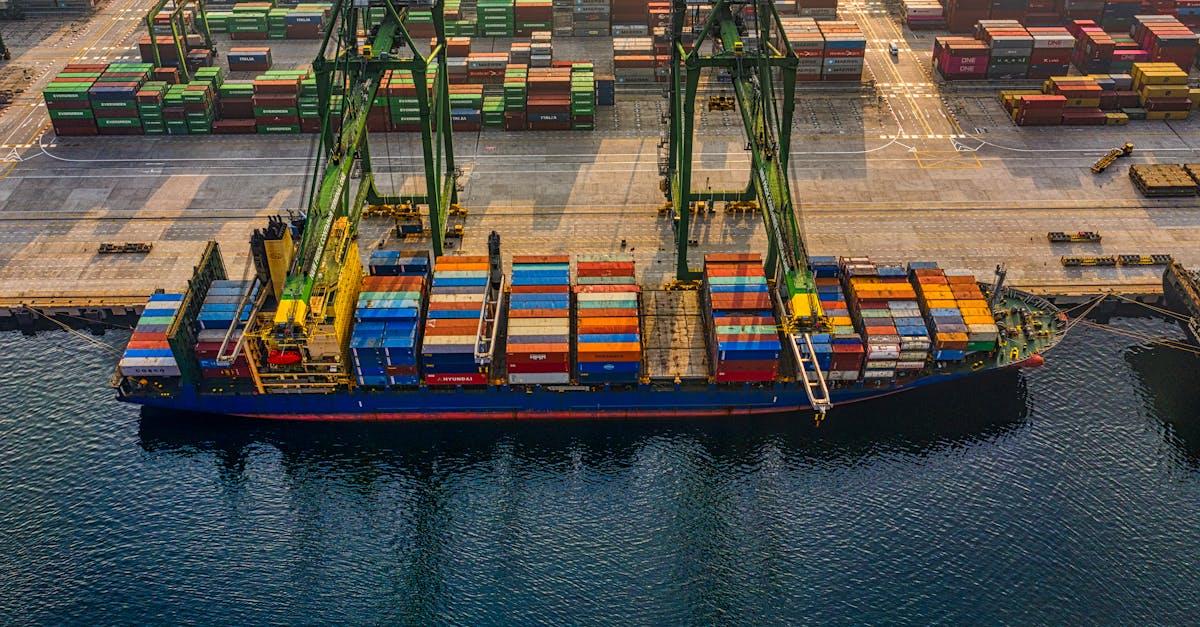
The Continued Instability of Global Supply Networks

Global supply networks have expanded and intertwined worldwide, yet they often reveal surprising fragility, as disruptions that once stayed local now spread across entire regions. This vulnerability stems not merely from unfortunate incidents but from deliberate structural decisions, evolving risk conditions, and incentives that favor lean, low-cost operations instead of resilient buffers. Grasping the underlying reasons demands examining specific breakdowns, the systemic forces at play, and the practical compromises businesses and governments confront when seeking to reinforce their supply chains.Prominent upheavals that revealed vulnerable pointsCOVID-19 pandemic: Factory closures, workforce shortages, and volatile demand between 2020 and 2022 led to widespread…

Read More
Why is multimodal AI becoming the default interface for many products?

Why Products are Adopting Multimodal AI as Default

Multimodal AI refers to systems that can understand, generate, and interact across multiple types of input and output such as text, voice, images, video, and sensor data. What was once an experimental capability is rapidly becoming the default interface layer for consumer and enterprise products. This shift is driven by user expectations, technological maturity, and clear economic advantages that single‑mode interfaces can no longer match.Human Communication Is Naturally MultimodalPeople do not think or communicate in isolated channels. We speak while pointing, read while looking at images, and make decisions using visual, verbal, and contextual cues at the same time. Multimodal…
Read More
Why debt limits global crisis response

How Debt Hampers International Crisis Efforts

Debt is a powerful fiscal constraint. When countries, institutions, or households carry heavy debt burdens, their ability to mobilize resources quickly and effectively to respond to pandemics, climate disasters, refugee flows, or financial shocks is sharply reduced. Debt operates through multiple channels — reducing fiscal space, raising borrowing costs, forcing austerity through conditionality, and creating coordination failures among creditors — and these effects compound during crises, turning local distress into prolonged global vulnerability.How debt restricts crisis response capabilities: the underlying mechanismsLoss of fiscal space: High debt service obligations (interest and principal repayments) divert government revenue away from emergency health spending,…
Read More
Russia: How investors evaluate sanctions exposure and indirect supply-chain risk

Russia Sanctions: Evaluating Investor Exposure

The Russian Federation represents an exceptional scenario for investors, as its sanctions landscape is broad, constantly evolving, and applied by major jurisdictions with extra-territorial authority. In addition to direct exposure to assets and revenue, companies must navigate intricate indirect risks involving suppliers, customers, shipping, insurance, financing, and counterparties. Evaluating these vulnerabilities demands a cohesive legal, operational, financial, and geopolitical assessment to prevent regulatory breaches, stranded assets, diminished market access, and reputational harm.Types of sanctions and measures that affect investorsRussia-related measures fall into categories that determine investor impact:Sectoral sanctions targeting energy, finance, defence and technology sectors—restricting debt/equity issuance, capital investment and…
Read More
What trends are shaping investor education and the rise of DIY investing tools?

Understanding Investor Education Trends & DIY Investing

Investor education is rapidly evolving as digital platforms, expanded data access, and shifting investor demographics transform how people understand and engage with financial markets, while do-it-yourself investing solutions have progressed from simple trading screens to full ecosystems blending education, analysis, and trade execution, and together these advances mutually reinforce each other, generating a cycle in which stronger education nurtures more confident self-directed investors and improved tools inspire even deeper learning.Expanding Access to Financial UnderstandingOne of the most influential trends shaping investor education is the broad democratization of financial information. Market data, once available mainly to institutions, is now accessible to…
Read More
How is synthetic data changing model training and privacy strategies?

The Role of Synthetic Data in Model Training & Data Privacy

Synthetic data describes data assets created artificially to reflect the statistical behavior and relationships found in real-world datasets without duplicating specific entries. It is generated through methods such as probabilistic modeling, agent-based simulations, and advanced deep generative systems, including variational autoencoders and generative adversarial networks. Rather than reproducing reality item by item, its purpose is to maintain the underlying patterns, distributions, and rare scenarios that are essential for training and evaluating models.As organizations collect more sensitive data and face stricter privacy expectations, synthetic data has moved from a niche research concept to a core component of data strategy.How Synthetic Data…
Read More
How do investors evaluate tail-risk hedges in practical terms?

Investor’s Practical Approach to Tail-Risk Hedge Evaluation

Tail risk refers to low-probability, high-impact market events that sit in the extreme ends of return distributions. Examples include sudden equity crashes, volatility spikes, liquidity freezes, or correlated sell-offs across asset classes. Investors use tail-risk hedges to protect portfolios against these events, accepting a steady cost in normal markets in exchange for protection during crises.In practical terms, investors assess tail-risk hedges not by considering whether they generate profits on average, but by determining whether they deliver a significant enhancement to portfolio results during periods of market strain. This assessment weaves together quantitative analysis, qualitative insight, operational limitations, and governance factors.Clarifying…
Read More
Finland: How deep-tech startups prove commercial traction in small home markets

Deep-Tech in Finland: Achieving Commercial Traction Locally

Finland is a country of roughly 5.5–5.6 million people with unusually high digital and scientific literacy, strong public research institutions, and a culture that supports engineering-intensive ventures. For deep-tech startups — companies building hardware, advanced materials, space, quantum, sensors, or scientifically rooted software — the Finnish home market is too small to scale purely by domestic sales. Yet many Finnish deep-tech startups show clear commercial traction early on. They do so by turning the constraints of a small market into strategic advantages: tight customer feedback loops, high-quality pilot partners, and efficient use of public R&D funding to de-risk technology before…
Read More
a man in gray suit jacket

Understanding the Runway Model’s Journey

The world of fashion is a complex tapestry interwoven with creativity, artistry, and a relentless drive for innovation. Within this vibrant landscape, the role of the runway model stands out as both coveted and pivotal. But what does it truly mean to be a runway model?The Essence of the Runway ModelAt its core, being a runway model involves more than just walking down a catwalk. It is about embodying the designer's vision and bringing life to their creations. A runway model serves as a moving canvas, showcasing clothes in a way that highlights the intricate details and craftsmanship. They must…
Read More
The Myth of Sustainable Fashion

Sustainable Style: Brands Making a Difference

In recent years, the fashion industry has come under heightened examination for its environmental footprint and ethical standards, prompting many brands to adopt more sustainable approaches that highlight eco-conscious design, responsible labor practices, and material reuse. Below, we explore the companies leading the charge toward a more sustainable future in fashion.PatagoniaPatagonia has long stood at the forefront of sustainable fashion, recognized as an outdoor clothing brand deeply engaged in environmental activism and long-term ecological responsibility. Patagonia incorporates organic cotton, repurposed materials, and runs a take-back program that enables worn garments to be recycled. The company's Worn Wear initiative promotes prolonging…
Read More