
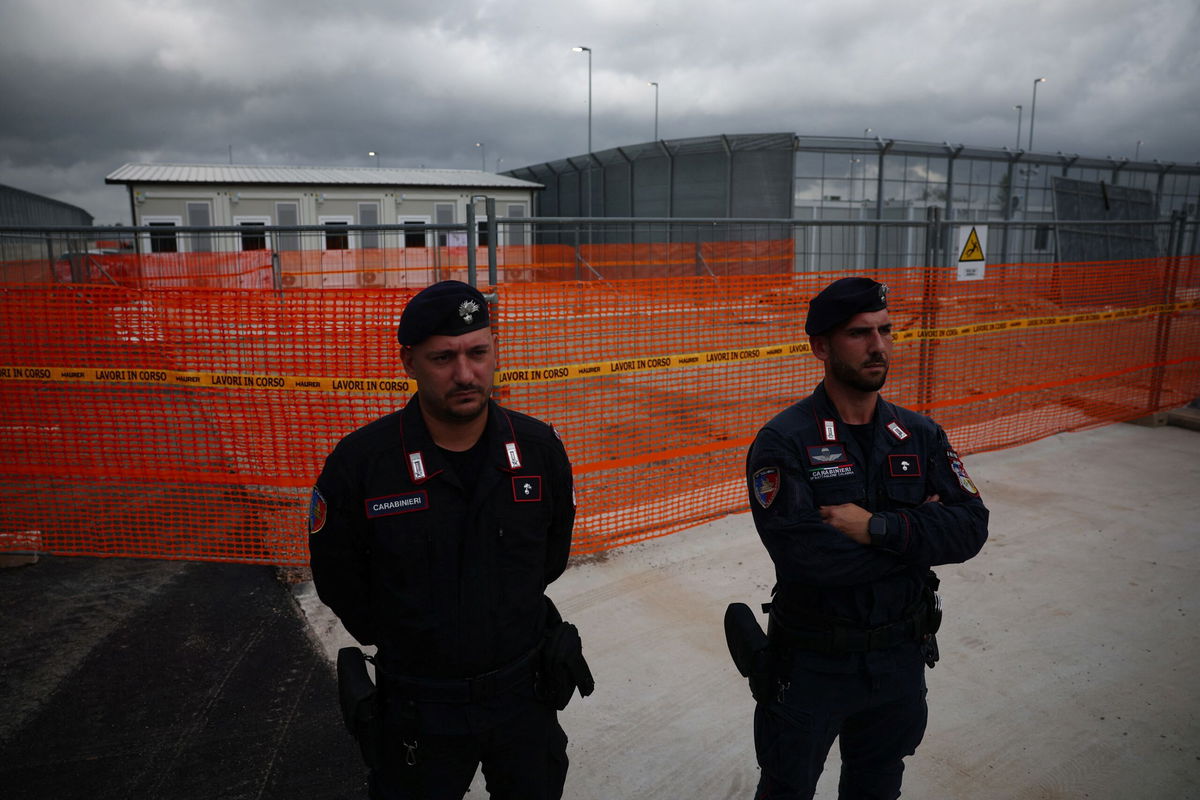

Efforts by several European countries to establish offshore processing centers for asylum seekers have encountered significant legal hurdles following a recent ruling by one of the continent’s highest courts. The judgment has thrown into question the future of proposals that aimed to relocate asylum applicants to third countries while their claims are being assessed—an approach that has been highly controversial from both legal and humanitarian perspectives.
The ruling, handed down by the European Union’s top judicial body, addressed the legality of outsourcing asylum procedures beyond EU territory. In its decision, the court emphasized that transferring responsibility for asylum processing to non-member states may violate established European legal frameworks and fundamental human rights protections.
In response to growing concerns over irregular migration and overwhelmed national asylum systems, a number of EU member states have proposed externalizing aspects of asylum processing. Under such plans, individuals arriving in Europe without authorization could be sent to partner countries—often outside the EU—where their protection claims would be evaluated. If found eligible, they could be resettled, potentially in Europe or another host country; if not, they might face deportation from the third country.
Several governments have advocated this approach as a method to discourage perilous migration paths and handle asylum processes more effectively. Supporters claim that processing claims abroad might avert fatalities at sea, interfere with trafficking networks, and alleviate pressure on domestic infrastructure. On the other hand, detractors contend that these policies avoid legal duties, put at risk those who are vulnerable, and may breach international standards.
In its recent ruling, the European Court of Justice (ECJ) determined that member states cannot transfer the core responsibilities of refugee protection to third countries unless those countries are deemed “safe” in both legal and practical terms. The judgment clarified that merely designating a country as safe is insufficient; the state in question must provide equivalent levels of protection and procedural safeguards as required by EU and international law.
The decision further emphasized the necessity for individuals to have access to just and efficient asylum processes, including the right to contest unfavorable outcomes. Any setup that undermines these protections might violate EU treaties, the European Convention on Human Rights, and the 1951 Refugee Convention.
This interpretation places a significant constraint on external processing schemes, especially those targeting regions with questionable human rights records or limited administrative capacity to handle large numbers of asylum cases.
The ECJ’s ruling has immediate implications for countries that had been exploring partnerships with third states to manage migration. For example, discussions about transferring asylum seekers to countries in North Africa or the Western Balkans will now require far more rigorous legal scrutiny. Any bilateral agreement must demonstrate that it fully upholds EU asylum standards, which may prove difficult in practice.
In recent years, nations like Denmark, Italy, and Austria have proposed the concept of processing outside their borders, mentioning the Australian system as a source of motivation. Nevertheless, Australia’s system of detaining people offshore—in places like Nauru and Papua New Guinea—has faced extensive criticism due to human rights violations, lengthy confinement, and psychological damage to those detained. Implementing a comparable approach in Europe currently seems more improbable according to the court’s advice.
Additionally, the ruling complicates broader EU efforts to reform its migration and asylum architecture. The bloc has been working on a New Pact on Migration and Asylum, which includes elements of border management, solidarity mechanisms, and faster processing. While some member states hoped external processing could complement these reforms, the legal barrier now raised by the court may force policymakers to reevaluate their approach.
The judiciary’s focus on maintaining legal and human rights norms highlights wider worries regarding the deterioration of asylum protections across Europe. Human rights groups have consistently cautioned that attempts to shift asylum responsibilities abroad could endanger vulnerable people by placing them in insecure settings where their rights might be overlooked.
The ruling by the ECJ strengthens the concept of non-refoulement, which forbids sending asylum seekers back to nations where they could encounter persecution or cruel treatment. Moreover, it underscores the significance of adhering to fair procedures, clarity, and availability of legal resolutions—factors that can be challenging to ensure in offshore locations, particularly in regions with weak legal infrastructures.
Este enfoque en los derechos humanos está en consonancia con las posturas de la Agencia de la ONU para los Refugiados (ACNUR), que ha instado a los países a conservar la responsabilidad de las solicitudes de asilo dentro de sus propias jurisdicciones y a evitar prácticas que los alejen de la responsabilidad legal.
Migration remains a contentious political topic throughout Europe, and the court’s decision is expected to elicit varied responses among the EU member countries. While certain governments may appreciate the reinforcement of legal norms, others—particularly those experiencing large numbers of migrant arrivals—may see the ruling as a hindrance to their border control initiatives.
Populist and anti-immigration parties may seize on the ruling to criticize what they perceive as judicial overreach or inflexible European regulations. Meanwhile, advocacy groups and refugee support networks are likely to see the decision as a crucial safeguard against the erosion of asylum rights.
In application, the decision might lead to increased investment in domestic solutions, such as boosting accommodation capabilities, refining asylum procedures, and fostering equitable responsibility distribution throughout the EU. It might also encourage fresh discussions on tackling the fundamental reasons for migration, incorporating issues like conflict, climate change, and economic instability in the migrants’ home countries.
While offshore processing schemes face heightened legal examination, EU nations are being encouraged to explore other options that align border control with humanitarian responsibilities. The court’s ruling does not completely abolish all collaboration with outside countries, but it does establish clear legal boundaries for these agreements.
Going forward, the challenge for European policymakers will be to craft migration policies that are both legally sound and operationally effective. This may involve enhancing support for frontline countries, streamlining procedures without undermining rights, and promoting safe, legal pathways for protection.
Ultimately, the court’s ruling serves as a reminder that while managing migration is a complex and often contentious issue, solutions must remain anchored in the rule of law and the values of dignity, fairness, and protection that underpin the European project.
