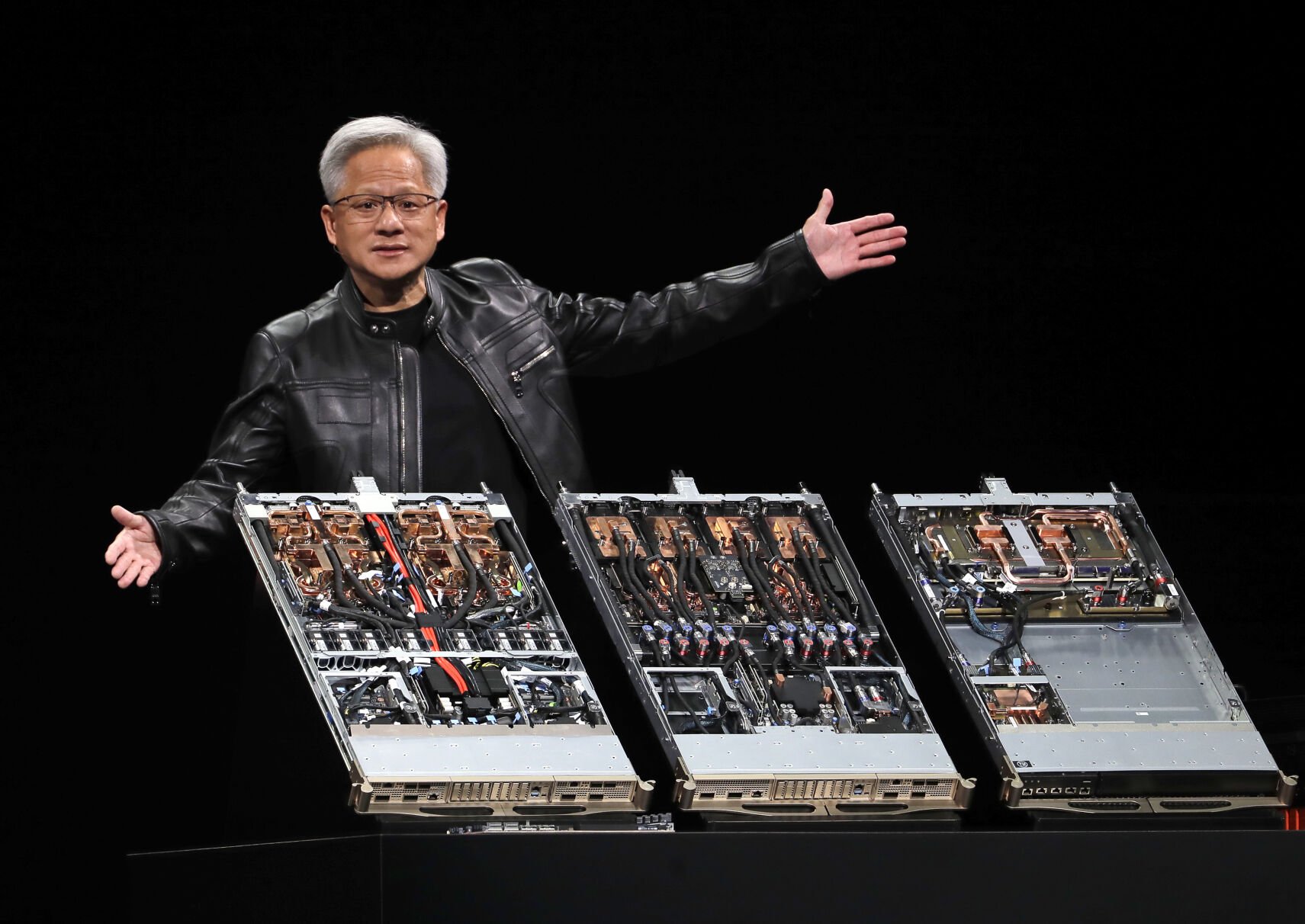

Nvidia is getting ready to bring back its H20 artificial intelligence (AI) chip to the Chinese market after securing the required approvals from the U.S. government. This decision comes after several months of uncertainty for the tech giant, which had temporarily halted the delivery of some AI chips to China due to changing export regulations imposed by Washington.
The H20 chip, part of Nvidia’s Hopper architecture and specifically designed to align with U.S. trade guidelines, represents the company’s strategic response to limitations placed on high-performance semiconductors destined for China. These restrictions were part of broader efforts by the U.S. to control the flow of advanced AI technologies that could have military or strategic applications. As a result, Nvidia had to revise its chip designs and introduce versions like the H20 with reduced performance to comply with regulatory requirements.
The refreshed authorization now permits Nvidia to continue transactions and deliveries of the H20 chip in China, an essential market for the firm’s future expansion. China accounts for a considerable share of worldwide demand for AI computing equipment, with cloud service providers, research organizations, and technology companies in need of robust GPUs for tasks like machine learning, data analysis, and applications involving generative AI.
Nvidia stated that it would resume deliveries “soon,” signaling a cautious but clear path forward for business operations in the region. The company’s spokesperson emphasized that the resumed sales are in full compliance with the current export controls, which dictate the maximum compute power and interconnect speed that AI chips can offer to customers in certain countries, including China.
Este anuncio llega en un contexto de tensiones geopolíticas persistentes entre Estados Unidos y China, especialmente en campos vinculados a la tecnología, el comercio y la seguridad nacional. En años recientes, Washington ha implementado una serie de restricciones a las exportaciones con el objetivo de limitar el acceso de China a las tecnologías más avanzadas de semiconductores. Estas políticas han ejercido presión sobre los fabricantes de chips estadounidenses como Nvidia, AMD y Intel, obligándolos a rediseñar o retener ciertos productos para los clientes chinos.
Nvidia demonstrates its flexibility and dedication to staying connected to one of the globe’s most significant technology markets by maneuvering through these limitations. By modifying the H20 chip to adhere to regulations while retaining its useful performance features, Nvidia strives to fulfill market needs without breaching legal requirements.
Industry analysts note that the H20 chip, though less powerful than Nvidia’s flagship AI processors such as the A100 or H100, still offers robust capabilities for many enterprise-level workloads. Chinese companies, particularly cloud computing platforms and AI startups, are expected to use the H20 to support applications in natural language processing, image recognition, and autonomous systems, among others.
There is also speculation that Nvidia’s approach to compliant chip design could serve as a model for other semiconductor firms looking to sustain international business under tightened regulations. By working closely with government agencies and adhering to compliance frameworks, companies can mitigate risk while preserving revenue streams in key global markets.
At the same time, some industry observers caution that the regulatory landscape remains fluid. Future policy shifts could further restrict chip exports or introduce new layers of complexity for companies operating across borders. For now, however, Nvidia’s resumption of H20 sales to China is seen as a positive signal for its presence in Asia and a stabilizing move in an otherwise uncertain environment.
Nvidia’s dominant presence in the AI hardware sector has placed it at the center of talks regarding the international semiconductor supply network and tech rivalry. The firm’s GPUs are seen as crucial to the ongoing surge in AI progress, facilitating a wide range of endeavors from cutting-edge studies to business AI implementations. Therefore, choices concerning the sales and distribution of its chips impact not only Nvidia’s financial results but also the wider strategic equilibrium in the worldwide tech field.
The reintroduction of H20 chip transactions to China might affect the buying strategies of Chinese companies, several of which have been looking into other suppliers or putting resources into local chip innovation as a reaction to export limitations. Nvidia’s comeback might alleviate these challenges briefly, yet the ongoing shift toward technological independence in China is expected to persist, bolstered by government programs and investments from the private sector.
Meanwhile, Nvidia continues to expand its offerings beyond hardware. The company has increasingly invested in software platforms, AI frameworks, and cloud-based services, aiming to build a comprehensive ecosystem that supports AI development across a wide range of industries. This diversified strategy may provide added resilience in the face of future regulatory changes and market fluctuations.
Nvidia’s planned resumption of H20 AI chip sales in China reflects its strategic adaptability and its continued relevance in global AI infrastructure. While regulatory compliance remains a central challenge, the company’s proactive response to trade restrictions demonstrates how leading tech firms can adjust to shifting geopolitical realities without sacrificing market position. The unfolding situation will remain a key point of interest for policymakers, competitors, and investors monitoring the intersection of AI, international trade, and national security.