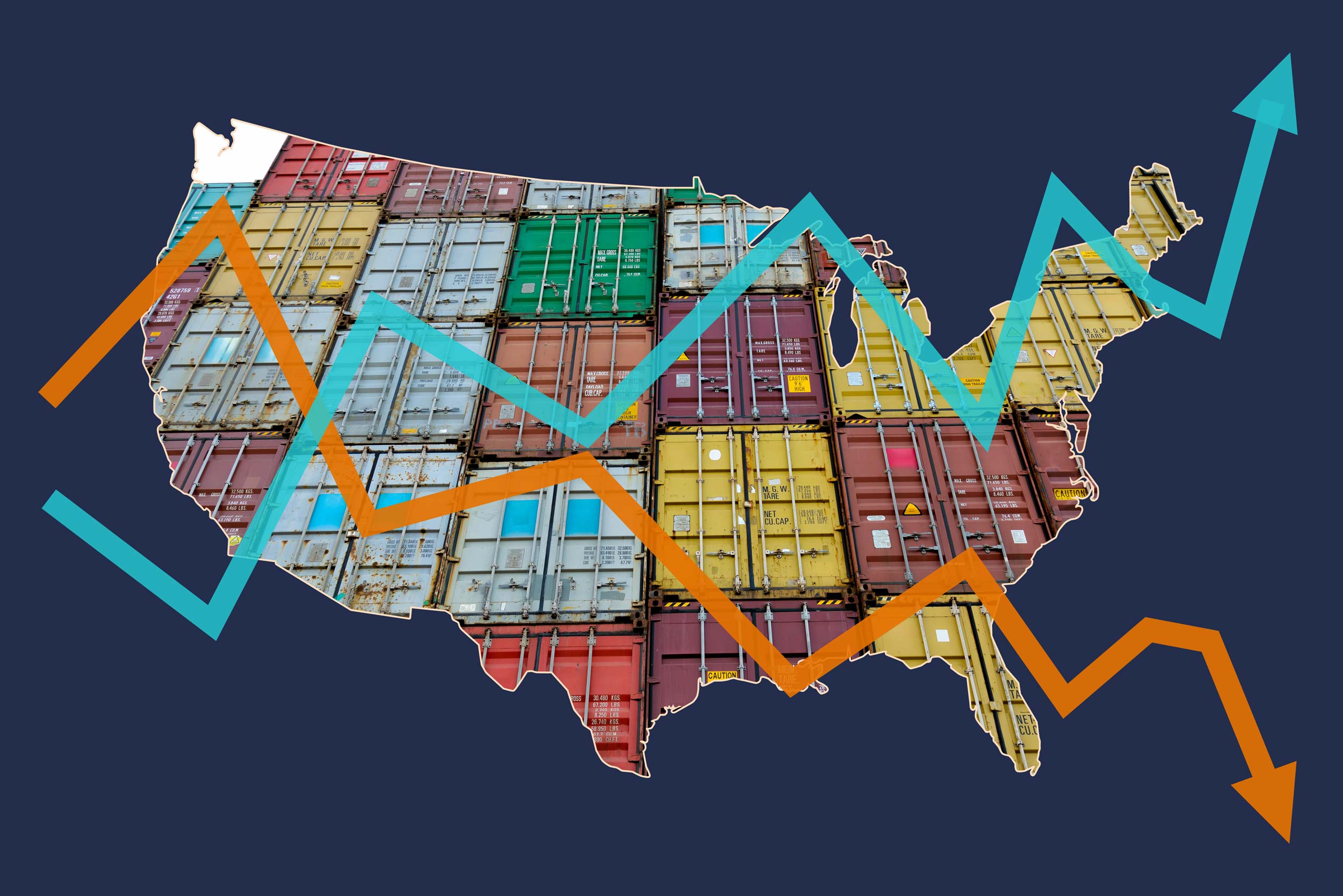

Consumers are beginning to feel the impact of tariffs as prices for everyday goods and essential items start to rise, according to economists who suggest that this could be just the early stages of a broader economic shift. The ripple effects of tariffs, which were initially viewed as a tool for protecting domestic industries, are now making their way into the pockets of ordinary households, sparking concern over future inflation and economic stability.
The imposition of tariffs, which are essentially duties on imported items, has been a long-debated topic in international trade policy. Nations employ them to promote the consumption of domestically made products and to create fair conditions for national industries that compete against less expensive overseas imports. Although these actions can shield specific industries, the larger economic impacts can be extensive and intricate.
In recent months, a variety of tariffs on essential imports like metals, electronics, machinery, and consumer goods have started to lead to increased costs in both the wholesale and retail markets. For companies that depend on imported resources or items, these extra expenses often present them with a challenging decision: either absorb the costs, which reduces their profit margins, or transfer them to consumers through price hikes.
Many companies, especially within the realms of manufacturing, construction, and retail, have opted for the latter approach, leading to significant hikes in the prices of goods spanning from electronics and vehicles to common household products. This pattern is currently mirrored in inflation statistics, with numerous nations noting an increase in consumer price indexes, which is in part due to the application of tariffs.
The motives driving the current surge in tariffs differ depending on the country and political circumstances. In certain situations, tariffs are implemented to tackle persistent trade disparities or as a response to perceived unjust trade actions. In alternative contexts, they serve as components of larger geopolitical tactics designed to affirm economic sovereignty or safeguard critical industries deemed essential for national security.
Regardless of the motivation, the result has been an increase in the cost of doing business for companies that depend on global supply chains. Industries that rely heavily on imported components—such as electronics, automotive, and construction—are particularly vulnerable. These sectors have already reported rising production costs, which, when passed on to consumers, can contribute to higher prices across a wide range of goods and services.
Small and medium-sized businesses are also feeling the pressure. Unlike large multinational corporations, which may have the resources to absorb cost increases or shift supply chains, smaller enterprises often have limited flexibility. This means they are more likely to pass costs directly to consumers or risk going out of business altogether. This dynamic not only affects consumer prices but also has potential implications for employment and local economies.
For families, the effect of increasing costs from tariffs is becoming noticeable in both subtle and significant manners. Consumers are seeing rising prices for daily necessities, such as food items, apparel, electronics, and household devices. Gradually, these small hikes can accumulate, creating pressure on family finances, especially for those with middle and lower incomes.
Economists stress that the impact of tariffs goes beyond merely increasing prices. They can also affect market behaviors, investment choices, and the dynamics of global supply chains. For instance, companies might decide to move their manufacturing plants to sidestep tariffs, potentially causing economic unpredictability and disturbing long-standing trade partnerships.
Moreover, when countries engage in reciprocal tariff measures—imposing taxes in response to each other’s actions—it can escalate into trade disputes that reverberate through the global economy. Past trade conflicts have shown that such tit-for-tat strategies can have lasting economic impacts, including reduced growth, market volatility, and declines in international cooperation.
One of the sectors closely watching the situation is the agricultural industry. In several cases, agricultural exports have been caught in the crossfire of trade disputes, leading to reduced demand for farm products in key international markets. This not only affects farmers’ incomes but also contributes to economic instability in rural regions that depend heavily on agricultural trade.
Energy prices, too, could be affected by tariffs, especially in markets where fuel, raw materials, or components for energy infrastructure are subject to import duties. This could lead to increased costs for electricity and transportation, further amplifying the inflationary effects on consumers.
To lessen some of the adverse effects of tariffs, governments might look into establishing specific relief strategies or financial support for impacted sectors. Nevertheless, these approaches bring their own challenges, such as the possibility of higher public expenditures and the difficulty in guaranteeing that support goes to the most affected areas.
Financial markets are also keeping a close eye on the developments. Investors typically view tariff-related trade tensions as risk factors that can influence stock market performance, currency values, and investment flows. Prolonged uncertainty over tariffs can erode business confidence, delay investments, and disrupt financial stability.
Some policymakers argue that tariffs are a necessary short-term tool to achieve longer-term economic goals, such as reducing dependence on imports, stimulating domestic manufacturing, or addressing national security concerns. However, the economic data suggests that achieving these outcomes without broader negative effects is extremely challenging.
International bodies like the World Trade Organization and the International Monetary Fund have persistently advised against the excessive implementation of protectionist policies, warning that such actions can have adverse effects by hindering worldwide economic expansion and raising expenses for everyone concerned.
The final outcome of the present tariff situation will be influenced by multiple elements: the length of time the tariffs remain in place, the potential for reaching trade agreements through discussions, and the ability of businesses and consumers to adjust. Should tariffs be withdrawn or lessened through diplomatic discussions, some of the inflationary forces may diminish. On the other hand, if additional tariffs are set up or current ones are broadened, the financial burden is expected to increase.
From the perspective of a consumer, paying close attention to expenditures and seeking ways to save money can mitigate some impacts of increasing costs. By making informed shopping decisions, evaluating price differences, and postponing non-essential buys, families can better manage the current economic situation.
At the same time, industry leaders are calling for greater dialogue between governments, trade bodies, and businesses to find balanced solutions that protect domestic interests without causing undue harm to consumers and the broader economy.
The situation remains fluid, with many economists advocating for careful monitoring of both price trends and consumer behavior in the months ahead. As the full effects of tariffs continue to unfold, it is clear that both businesses and consumers will need to remain adaptable and informed.
What is clear is that the dialogue about tariffs is not limited to political debates in governmental chambers anymore—it has become a part of the daily experience for countless individuals. As costs keep escalating, the aspiration is that joint approaches can be developed to secure economic stability, safeguard jobs, and uphold the equilibrium between domestic priorities and international collaboration.