
It’s no secret that Panama’s real estate market continues to attract both local buyers and foreign investors thanks to its economic stability, urban growth, and competitive tax advantages. However, beyond the purchase price of a property, it is essential to understand the taxes that may arise when becoming a property owner in the country.
Understanding what real estate taxes in Panama are and how they work allows you to make more informed decisions and properly plan a long-term investment. Aspects such as property tax, capital gains, or rental income are part of the considerations every buyer must evaluate before purchasing a home or investment property.
Which tax factors shape the process of acquiring and owning properties in Panama?
The Panamanian tax system offers favorable conditions for real estate investment, including exemptions and benefits applicable to certain types of properties. Understanding these elements is key to correctly estimating the costs and benefits associated with purchasing a property.
How property taxes operate
The main tax related to real estate in Panama is the property tax. This annual tax is calculated based on the property’s registered assessed value and applies only to the amount exceeding the exemption thresholds established by current legislation.
Properties designated as primary residences may benefit from partial exemptions or tax reductions, depending on their registered value. Additionally, new homes within certain residential projects may qualify for tax exemption periods, which represents a significant advantage for buyers and investors. These types of incentives aim to stimulate real estate development and facilitate access to housing within modern, planned communities.
Capital Gains Resulting from Property Sales
When a property owner chooses to sell and ends up making a profit, capital gains tax may be charged, as this levy applies to the positive gap between what was originally paid for the property and the amount received from its sale.
In Panama, the regular tax rate stands at 10% of the profit earned, yet this charge applies solely at the moment of sale and leaves untouched the period during which the property is owned as a residence or investment asset, and for individuals purchasing real estate with the goal of appreciation and eventual resale, a clear grasp of this tax becomes essential.
Taxation of Rental Properties
In situations where a property produces revenue from rentals, that revenue can be liable for income tax because it is treated as income generated within Panamanian territory.
This applies especially to properties acquired for investment purposes or for short- and long-term leasing. Conversely, homes used exclusively as a primary residence do not generate this type of additional tax liability. That is why it is crucial to define the purpose of the property from the outset—that is, whether it is residential or an investment—as this facilitates better financial and tax planning.
What additional expenses can accompany real estate ownership?
Beyond taxes, homeowners in Panama should also account for various additional costs, which may involve maintenance charges in private residential communities, utility expenses, and municipal levies, all influenced by the specific location and features of the development.
In planned communities, these fees are often directed toward the upkeep of shared spaces, security services, landscaping work, and communal amenities. While they constitute a regular expense, they also contribute to maintaining the area’s overall quality and boosting the property’s long-term value.
Panama and Its Tax Appeal for Real Estate Investors
One of the factors strengthening Panama’s real estate market is its territorial tax system, which taxes only income generated within the country. This model, combined with the use of the U.S. dollar and financial stability, creates an environment of financial predictability and confidence for both domestic and international buyers.
Properties located in areas with sustained growth and close to Panama City stand out particularly for offering a balance between quality of life, connectivity, and appreciation potential. This makes the country a competitive alternative compared to other real estate markets in the region.
Properties in Panama West: A Real Estate Venture Offering Tax Advantages
Grasping how property taxes work in Panama is crucial for accurately assessing a real estate investment and making the most of available tax incentives. Elements like applicable levies, exemptions for newly built residences, and the tax rules governing rentals or property transfers form part of a legal framework that consistently draws both buyers and investors to the country.
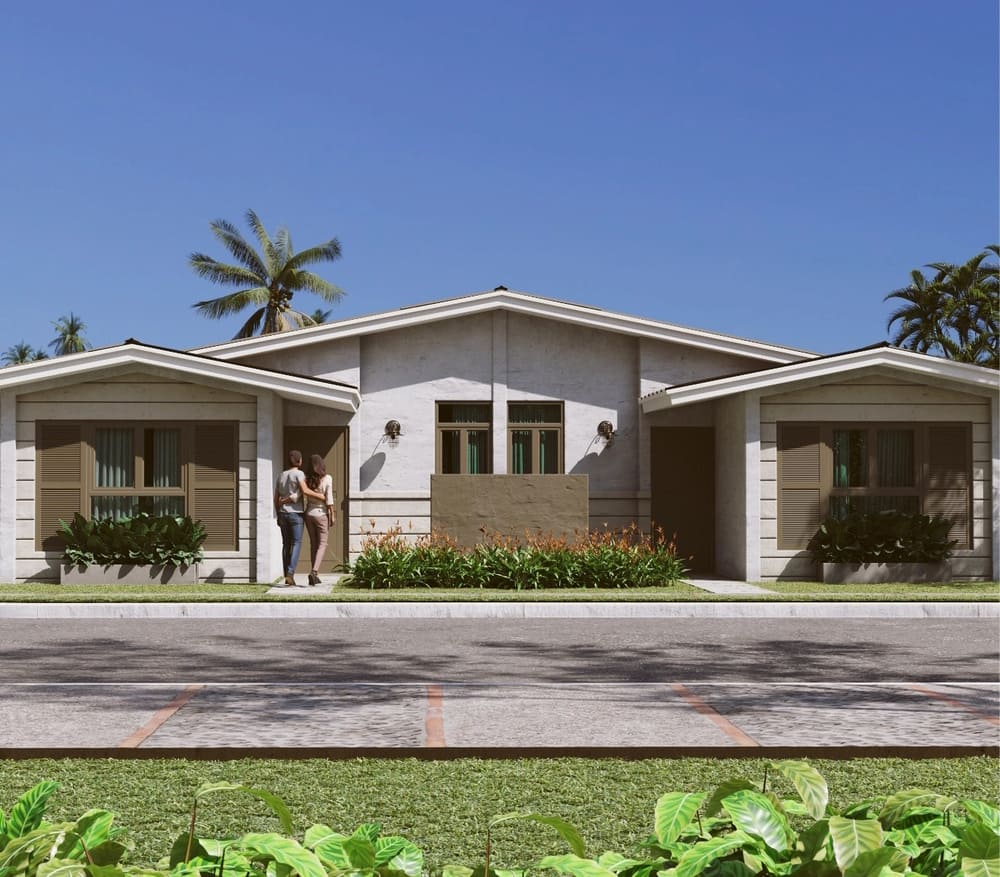
Thanks to these advantages, numerous residential developments in regions like Panama West have experienced growing interest, exemplified by Bayside. These kinds of communities appeal to buyers for their blend of tax incentives, long-term growth prospects, and enhanced quality of life within contemporary, well-planned environments. Coastal homes located just minutes from Panama City, paired with modern amenities, offer compelling choices for individuals seeking properties with steady appreciation potential and a residential setting centered on comfort and strong connectivity.