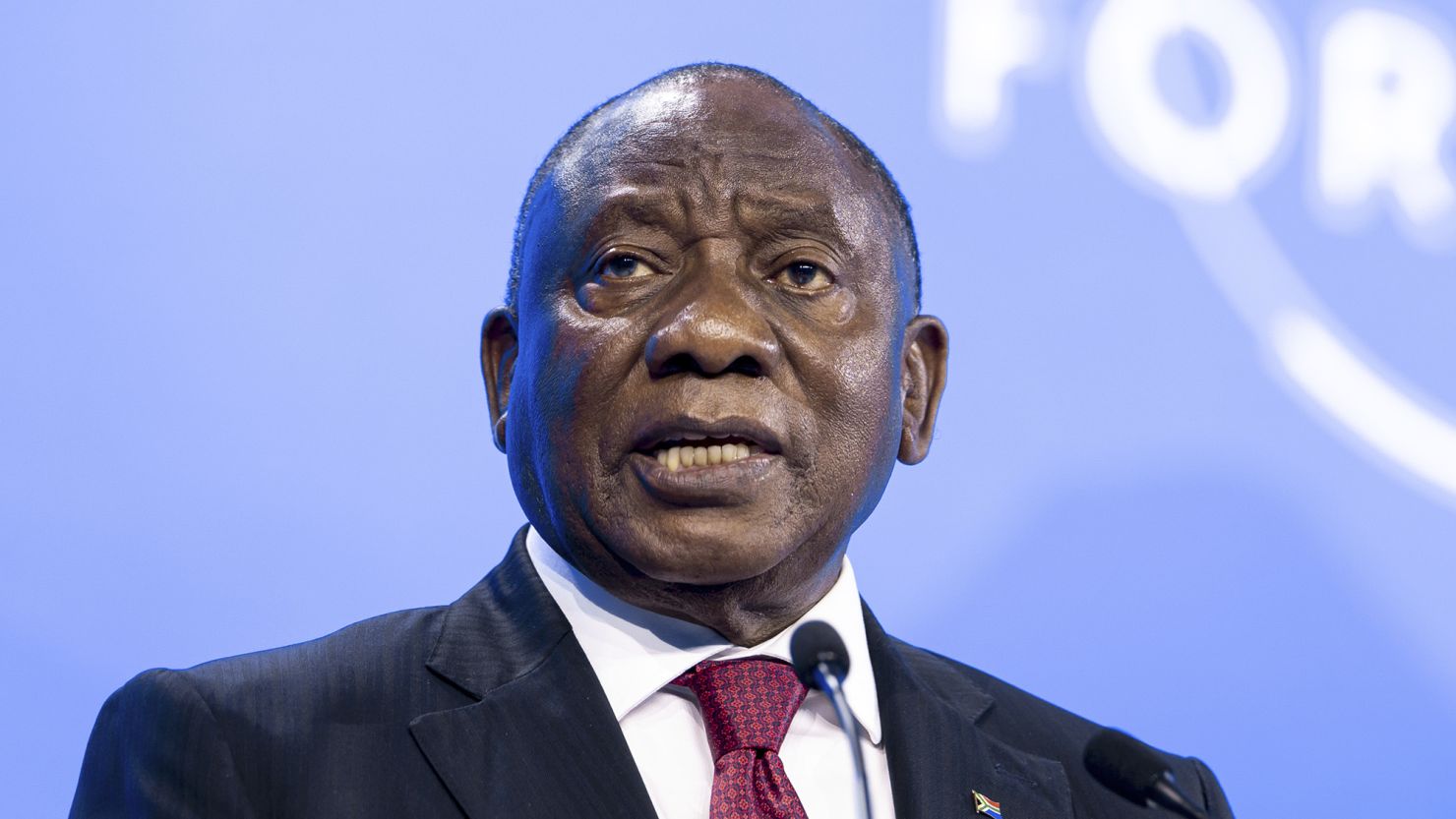

Cyril Ramaphosa, the President of South Africa, has openly voiced his disapproval of the suggested 30% duty on South African products, which was recently introduced by the former U.S. leader Donald Trump. This tariff suggestion, part of a broader economic plan associated with shifts in trade, has sparked worries not just in South Africa but also among worldwide trade analysts who dread its possible effects on international relations and developing market economies.
The suggested tariff, focused particularly on exports from South Africa to the United States, aligns with Trump’s persistent narrative highlighting national priorities and safeguarding American businesses. The former president has justified the decision as a crucial step to address what he calls “unfair trade practices,” while opponents, such as President Ramaphosa, have pointed out the significant effects these measures might have on developing nations, especially those dependent on United States trade.
In a recent announcement, Ramaphosa highlighted the significance of keeping trade routes open between South Africa and the U.S., pointing out that harsh tariffs pose a risk to both his nation’s economic development and the historically cooperative and mutually advantageous diplomatic relations. “South Africa has consistently aimed to interact with its trading partners sincerely,” Ramaphosa observed. “The implementation of high tariffs on our goods contradicts the values of equitable trade and partnership that our two countries have supported for a long time.”
The suggested tariffs are aimed at various South African products, such as metals, farm goods, and manufactured products, which are vital to the nation’s export-driven economy. The United States is an important trade partner for South Africa, and the possibility of a 30% tariff brings the threat of job cuts, decreased investment, and economic uncertainty, especially as the country works to bounce back from the financial impacts of recent global issues.
Economists have expressed their opinions on the possible outcomes, indicating that these tariffs might not only affect South Africa’s export industries but could also create a concerning standard for interactions between larger economies and emerging markets. A number of analysts believe that this action represents a trend toward protectionism, which might have wider consequences for international trade standards, whereas others propose that nations like South Africa should consider expanding their range of export markets to lessen the risks associated with these independent measures.
In his address, Ramaphosa called for constructive dialogue as the preferred avenue for resolving trade disputes. He emphasized South Africa’s commitment to the rules-based international trading system, anchored by institutions such as the World Trade Organization (WTO). He also underscored the need for equitable trade practices that recognize the asymmetries between developed and developing economies.
The potential impact of the proposed tariffs extends beyond economics. Observers warn that trade tensions could strain the diplomatic relationship between the two countries, which has historically been characterized by cooperation in areas such as security, education, and development aid. South Africa has long been viewed as a strategic partner for the United States in Africa, and any deterioration in bilateral relations could have ripple effects across the continent.
The proposed tariff is also being discussed in the context of South Africa’s membership in the BRICS alliance—a coalition that includes Brazil, Russia, India, China, and South Africa, aimed at fostering economic cooperation among emerging economies. Trump has previously voiced skepticism toward countries associated with the BRICS bloc, suggesting that the alliance represents a challenge to Western economic dominance.
Ramaphosa, however, has emphasized that South Africa’s global partnerships do not exclude one another and that his administration is devoted to maintaining good interactions with both Western countries and its BRICS associates. “We have faith in the strength of multilateralism,” he expressed. “South Africa’s growth is most effectively supported by connecting with all parts of the globe, while avoiding the adoption of polarizing economic strategies.”
Labor unions and executives in South Africa have echoed worries about the suggested tariff hikes. Leaders from vital sectors—such as mining, agriculture, and manufacturing—have cautioned that enforcing high tariffs could result in considerable job cuts, particularly as South Africa is struggling with high unemployment and economic disparities.
Small and medium-sized businesses, especially, are likely to face a significant impact. A large number of these companies depend on international markets for their operations, and the additional expenses due to tariffs might make their products less competitive in American markets. Industry leaders have urged the South African government to initiate immediate diplomatic talks to find a solution and look into different markets if the tariffs come into effect.
On its side, the United States has asserted that the tariffs aim to shield its local industries from what it views as unfair competition. Trump’s position on trade has consistently supported protectionist actions, contending that these policies defend American employment and sectors from international rivals. Nonetheless, opponents claim that these actions frequently trigger counter-tariffs, interrupt supply networks, and negatively affect consumers by driving up prices.
The broader international community is watching the situation closely. Global markets remain sensitive to trade disruptions, particularly as many countries continue to recover from the economic impacts of the COVID-19 pandemic and ongoing geopolitical instability. Economists caution that escalating trade tensions between the U.S. and key partners like South Africa could contribute to economic uncertainty at a time when stability is urgently needed.
As discussions continue, Ramaphosa has reiterated South Africa’s readiness to engage constructively with U.S. trade representatives. He has also suggested that both countries could explore expanded cooperation in areas such as green technology, digital innovation, and infrastructure development—sectors that offer potential for mutually beneficial growth without resorting to punitive economic measures.
The scenario highlights the growing intricacies of international trade relationships in today’s world. As countries manage conflicting priorities, evolving partnerships, and domestic political pressures, the task is to identify common ground that promotes fairness, equity, and mutual prosperity.
Although the intended tariffs have not been implemented, the imminent likelihood has already initiated significant discussions in both South Africa and the United States regarding the future of trade relations between the two countries, the influence of emerging economies, and the way ahead in a progressively interconnected global economy.
For South Africa, the hope remains that dialogue, rather than division, will prevail, allowing both nations to continue building a relationship that supports growth, opportunity, and mutual respect. For the international community, this moment serves as a reminder of the delicate balance between national interests and global cooperation—an equilibrium that will shape the contours of trade for years to come.