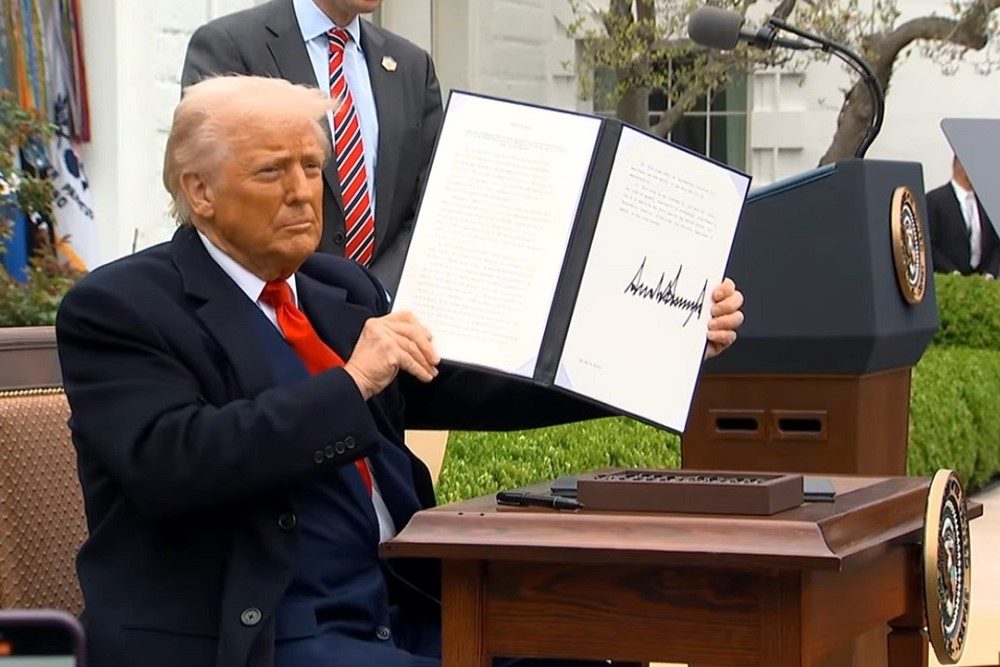

The recent announcement of new tariffs by Donald Trump has caused a ripple of reactions across global markets. Businesses from various sectors are now re-evaluating their strategies as they prepare for the impact of these trade changes. With new import taxes ranging from 10% to 41%, many companies find themselves in a state of uncertainty—unsure whether to brace for disruption, adapt quickly, or find alternative solutions.
El numeral arancelario forma parte de una iniciativa más amplia por parte de Trump para reorganizar las relaciones comerciales globales. A pesar de que la intención podría ser proteger las industrias nacionales, la situación es más complicada. Las empresas a nivel mundial, incluidas las de Estados Unidos, están evaluando ahora los posibles costos de operar bajo estas nuevas condiciones.
An urgent worry for various sectors is the rising expense of imported commodities. For producers, especially those dependent on components or raw materials from other countries, the escalation in costs might alter manufacturing budgets. Industries like car manufacturing, technology devices, home equipment, and certain food businesses are anticipated to encounter the strain initially. As materials get pricier, it generally results in increased consumer prices or lower profit margins for businesses.
For those who export, the issue alters a bit. Certain nations are currently confronted with tariffs that might render their products less appealing or affordable in the American market. This situation might decrease sales, diminish income, and potentially result in job losses if there is a notable decline in demand. For smaller companies that rely on consistent international partnerships, the obstacle could be even more significant.
The financial markets have responded in kind. In the days following the announcement, several stock indexes experienced mild volatility. Investors are known to react quickly to policy changes that could affect trade and economic stability, and this case has been no different. Some sectors have seen more pressure than others, especially those heavily involved in global supply chains.
Despite the initial concerns, not all businesses are reacting with panic. In fact, some see the tariffs as manageable or even an opportunity. Countries or regions receiving lower tariffs may use the moment to reinforce trade ties with the U.S., offering incentives or partnerships to strengthen business relationships. Others may redirect exports to alternative markets, diversifying their client base to reduce dependence on any one country.
In the United States, local businesses are evaluating possible courses of action. For numerous firms, managing the increased expenses might not be viable over an extended period. Some intend to increase prices, whereas others are examining their supply chains to identify regional or duty-free providers. This adjustment period could be lengthy and might influence their operational efficiency.
Retailers and consumers could also see changes. If higher costs on imported goods are passed down the supply chain, prices on everyday products could rise. This is particularly concerning for families and individuals already managing tight budgets. Inflation, if it accelerates due to tariff-related increases, could become a new issue for the broader economy.
Nonetheless, not all enterprises view the situation as unfavorable. Certain U.S. producers are in favor of the action, anticipating that it might foster an increase in local manufacturing and limit international rivalry. These businesses claim that the tariffs might ultimately result in job generation and enhanced industrial expansion across the nation. Yet, this result hinges on various elements, such as consumer interest, the availability of workforce, and the capacity of local companies to expand production.
Apart from the economic aspects, the political implications of the tariffs hold considerable importance. Trump’s trade strategy prioritizes national priorities, encourages local manufacturing, and aims to adjust trade imbalances. Regardless of whether people support or oppose this tactic, the tariffs clearly indicate that international companies need to remain flexible and adaptive in a rapidly shifting environment.
Long-term, the full effects of these measures remain to be seen. Tariffs can take time to ripple through markets and supply chains. Some impacts will appear immediately, while others may unfold gradually over months. Businesses that plan ahead, diversify their sources, and stay informed will be in a better position to manage the risks.
There’s also the question of how other governments might respond. Retaliatory tariffs or revised trade agreements could emerge, changing the global trade map even further. For multinational companies, this adds yet another layer of complexity to their operations and planning.
The new tariffs introduced by Trump have sparked a wide range of reactions—from concern and uncertainty to strategic planning and cautious optimism. Whether the overall effect will be positive or negative depends largely on how quickly businesses adapt and how governments respond. What is certain is that the global trade environment has become more unpredictable, and flexibility will be key for businesses aiming to remain competitive in this shifting landscape.