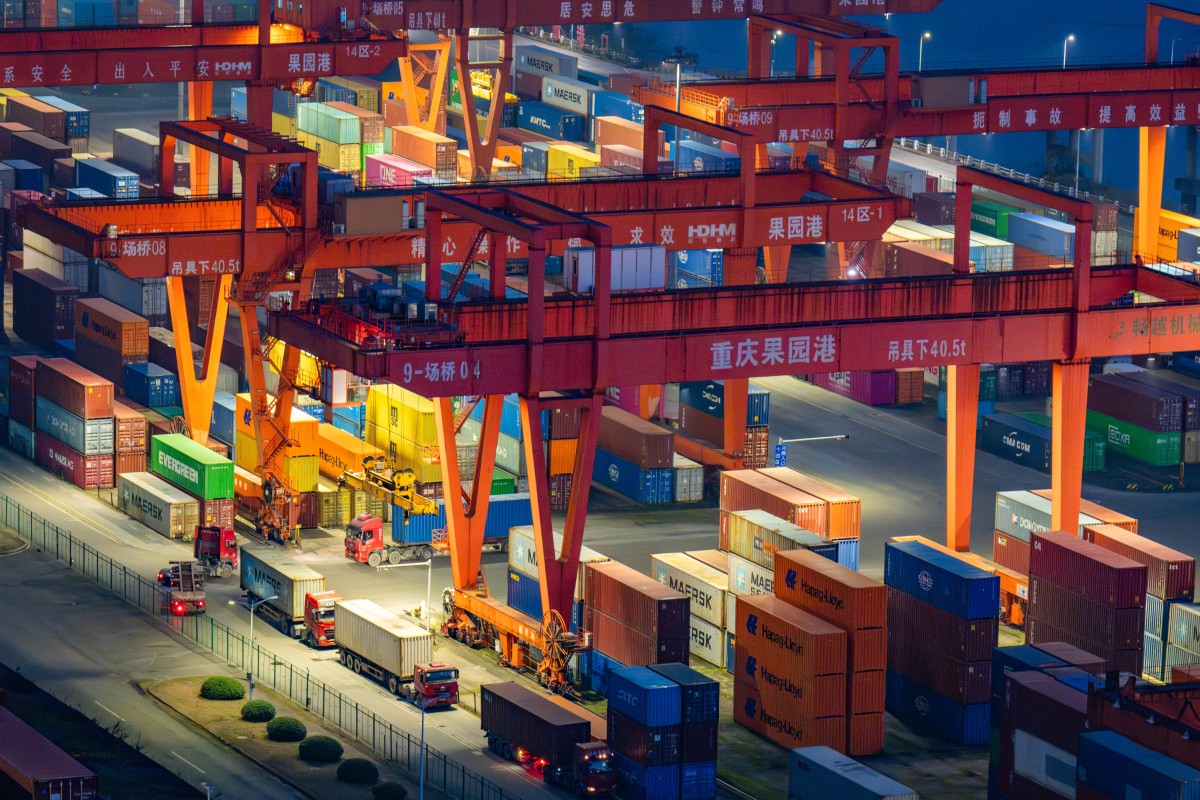

The latest economic report from China revealed better-than-expected growth, indicating persistent strength despite increasing worries about possible new tariffs from the United States. Government representatives released the new statistics, which demonstrate strong performance in multiple critical sectors, implying that local demand and industrial production have helped buffer against growing external challenges.
Experts had predicted a slight growth, taking into account a complicated scenario characterized by international trade conflicts, changing supply chains, and domestic changes. Nonetheless, China’s economic output exceeded these expectations, providing some comfort to investors and officials who have been attentively observing the nation’s course amidst ongoing trade tension with the United States.
This financial performance occurs at a pivotal moment. As talks of new tariffs resurface from the United States—especially under the influence of former President Donald Trump’s trade policies—China’s capacity to uphold stability and expand economically has become increasingly significant. Even though the potential for new tariffs has not completely come to pass, the sheer possibility has added a level of unpredictability to the worldwide economic forecast.
The recent growth has been largely driven by a combination of consumer spending, infrastructure investment, and a steady recovery in the manufacturing sector. Retail sales have improved, supported by government stimulus and rising consumer confidence, while construction and industrial output continue to show solid gains. These elements together have helped offset a decline in exports, which have faced pressure from both softening global demand and the lingering effects of previous trade restrictions.
Financial markets had a favorable reaction to the latest figures, interpreting them as evidence of China’s economic resilience in the midst of geopolitical and macroeconomic hurdles. Although certain investors maintain a cautious stance regarding potential long-term hazards, the most recent statistics support a wider story indicating that China is not merely withstanding external shocks but, in several ways, is also developing as a result of them.
One reason for this resilience is the Chinese government’s active role in guiding the economy. Targeted support measures—including tax relief for small businesses, infrastructure funding, and investment in high-tech manufacturing—have played a role in bolstering domestic demand. At the same time, monetary policy has remained relatively flexible, with adjustments made to support credit flow while maintaining financial stability.
Yet, the future path could pose additional challenges. The political climate in the U.S. is once more focusing on trade inequalities, with fresh discussions hinting at the possibility of tariffs being reintroduced or increased. Should these policies be enacted, they might target reducing imports from China or penalizing industries considered strategically vital. For China, this situation poses both economic and diplomatic hurdles, as it tries to preserve stable relations while safeguarding its economic priorities.
Even though past tariff exchanges between the U.S. and China led to interruptions in trade routes and increased expenses for producers, they also led to a reshuffling of supply channels. Since then, China has strengthened its local trade connections, broadened its export destinations, and invested significantly in its internal capacities. These measures have aided in shielding the economy from some of the direct impacts of trade instability.
The possibility of a new tariff conflict, however, poses a risk of disrupting this advancement. Companies in both countries are cautious about policy changes that might impact costs, component supply, and strategic investment decisions. For global companies functioning in China, the reemergence of trade unpredictability could lead to challenging choices about sourcing, manufacturing, and entry to markets.
Economists caution that while China’s recent growth figures are encouraging, external headwinds remain significant. A fragile global recovery, ongoing supply chain disruptions, and inflationary pressures in other major economies could still impact China’s economic performance in the months ahead. In this context, maintaining robust domestic demand and pursuing further structural reforms will be key priorities for Chinese leadership.
Furthermore, the evolving geopolitical landscape—marked by technological competition, regulatory divergence, and shifting alliances—adds another layer of complexity to future growth prospects. China’s focus on achieving technological self-sufficiency and expanding its role in global innovation ecosystems reflects a broader strategic pivot that goes beyond short-term trade dynamics.
The international community will be watching closely as both China and the United States navigate the possibility of renewed trade tensions. Any move toward implementing additional tariffs would not only affect bilateral trade but could also influence global markets, commodity prices, and investor sentiment. Coordination through diplomatic channels and multilateral frameworks may help mitigate the risk of escalation, but significant uncertainties remain.
From a policy perspective, China appears committed to maintaining a stable growth path through domestic investment, technological innovation, and expanded international cooperation. Initiatives such as the Belt and Road Initiative, digital infrastructure expansion, and renewable energy development highlight Beijing’s intent to position itself at the center of future economic trends.
Hence, the solid results for the quarter have been perceived not merely as a short-lived recovery but as a segment of a more comprehensive strategy to fortify domestic economic engines. It remains uncertain whether this plan will be adequate to manage external challenges—particularly considering changes in U.S. trade policies. Nevertheless, the most recent figures provide at least a short-term assurance that the Chinese economy continues to be stable.
For global investors and policymakers, China’s growth trajectory will continue to play a significant role in shaping worldwide economic dynamics. As one of the world’s largest economies and a critical player in global supply chains, China’s ability to withstand external pressure while fostering internal innovation will be a key theme in the evolving narrative of post-pandemic economic recovery.
In the weeks and months to come, all eyes will remain on how trade discussions unfold and whether looming tariff threats translate into action. Until then, China’s latest growth figures stand as a clear indication that the world’s second-largest economy still has momentum—even amid geopolitical uncertainty and trade policy shifts.