
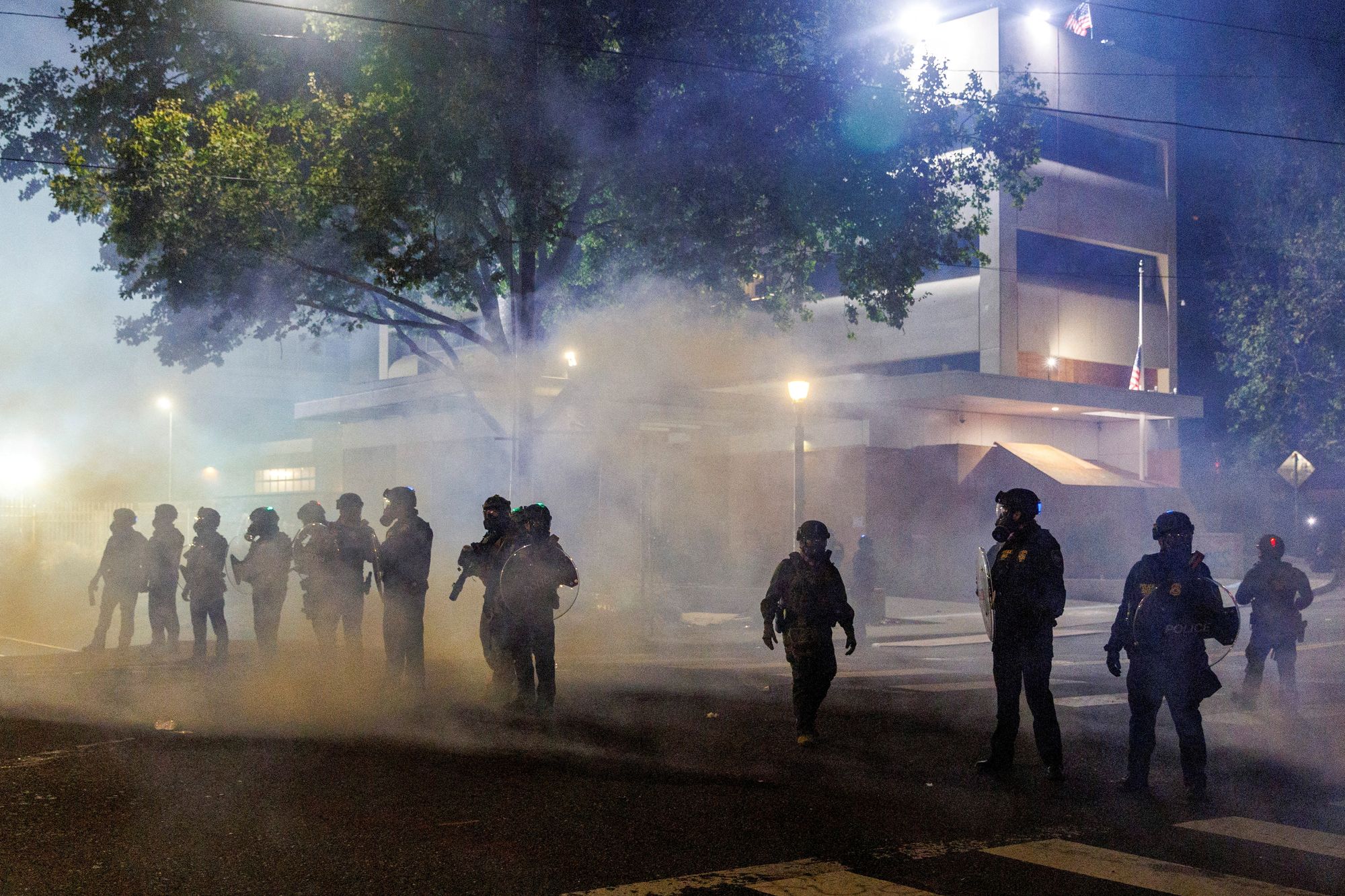

The announcement of sending federal personnel to Portland has reignited national debates about immigration enforcement, public safety, and the role of federal authority in local jurisdictions.
La decisión de enviar tropas a Portland marca un nuevo capítulo en las tensiones actuales entre el gobierno federal y algunas administraciones locales. Esta acción se presentó como un paso necesario para garantizar la seguridad de las instalaciones de Inmigración y Control de Aduanas (ICE), que han sido cada vez más el centro de manifestaciones y críticas. Al poner el énfasis en la seguridad y el orden, la administración busca justificar una presencia federal en una ciudad donde tanto los funcionarios como muchos residentes se han manifestado abiertamente en contra de tales intervenciones.
Federal priorities and the rationale behind the move
The declared aim of the deployment is to protect federal assets and staff from possible dangers. In past years, ICE locations have been focal points of intense protests, with activists highlighting immigration policies they consider unjust and damaging. Protesters contend that these establishments represent a larger enforcement system that divides families and subjects at-risk communities to continuous fear of detention.
For government representatives at the national level, the story changes. They claim that not safeguarding ICE facilities could encourage disruptive elements, weaken legal authority, and jeopardize vital government functions. Deploying federal forces demonstrates the administration’s readiness to establish control in places where it believes local officials cannot or choose not to uphold order.
Este cambio representa una tendencia más amplia en la que el poder federal se ha afirmado de manera más enérgica en las disputas sobre la aplicación de la ley de inmigración. También subraya la continua divergencia entre las políticas de Washington y la postura de muchos gobiernos locales, especialmente en ciudades que se han declarado como refugios para inmigrantes.
Local response and community concerns
The deployment of federal forces has sparked strong reactions from local leaders, civil rights groups, and community members in Portland. City officials have expressed concerns that a military-style presence could escalate tensions rather than calm them. Many worry that the decision may lead to confrontations between residents and federal personnel, resulting in further unrest and eroding trust in institutions.
For locals, the action prompts inquiries concerning constitutional entitlements, the right to express oneself freely, and the equilibrium between protection and individual freedoms. Detractors claim that deploying soldiers close to protests might discourage legitimate demonstrations and label opposition as criminal. Additionally, they worry that the heightened militarization of national enforcement might exacerbate community divisions, fostering an atmosphere of fear instead of security.
Supporters of the deployment, on the other hand, maintain that ensuring the protection of federal facilities is a legitimate responsibility of the government. They argue that without intervention, property damage and violent clashes could continue unchecked, undermining both security and stability. This contrast in perspectives underscores the broader ideological divide within the country about the appropriate role of government in addressing social conflict.
Broader implications for national politics
The choice to deploy military forces to Portland should not be seen as an isolated event. It is connected to a broader trend involving federal actions related to demonstrations, immigration discussions, and political divide in the United States. By portraying the defense of ICE centers as a national security concern, the administration presents the matter as more than just a local issue, symbolizing its wider dedication to maintaining law and order.
This methodology strikes a chord with advocates who perceive stringent implementation as vital for upholding sovereignty and stability. Concurrently, it amplifies disapproval from critics who regard these actions as authoritarian and neglectful of democratic principles. The conflict of viewpoints has become a hallmark of political dialogue, influencing how Americans perceive both immigration policy and the application of federal authority.
Looking ahead, the presence of federal troops in Portland could set a precedent for similar interventions in other cities. If successful in preventing disruptions, the strategy may encourage broader applications of federal authority in contexts where local governments resist cooperation with national policies. Conversely, if tensions escalate and unrest worsens, the move may reinforce arguments that such deployments undermine public trust and inflame divisions rather than resolve them.
Implications for the coming times
Ultimately, the decision to send troops to Portland reflects deeper questions about governance, democracy, and national identity. It forces Americans to confront the balance between protecting institutions and respecting individual rights, as well as the limits of federal intervention in local matters. For Portland, it means navigating a period of heightened scrutiny, where the city becomes both a symbol and a battleground in a larger political struggle.
For the government, the rollout provides a chance to demonstrate its commitment to safeguarding safety and order, despite the potential backlash over exceeding limits. For locals, activists, and community leaders, it signifies a test of preserving communal principles while dealing with the impact of national authority.
The controversy underscores how immigration enforcement, public safety, and political identity remain intertwined in ways that define not only local conflicts but also the broader trajectory of the United States. Whether the decision to send troops will achieve stability or deepen divisions remains uncertain, but its impact will resonate far beyond Portland in the ongoing debate about the role of government in shaping the nation’s future.
