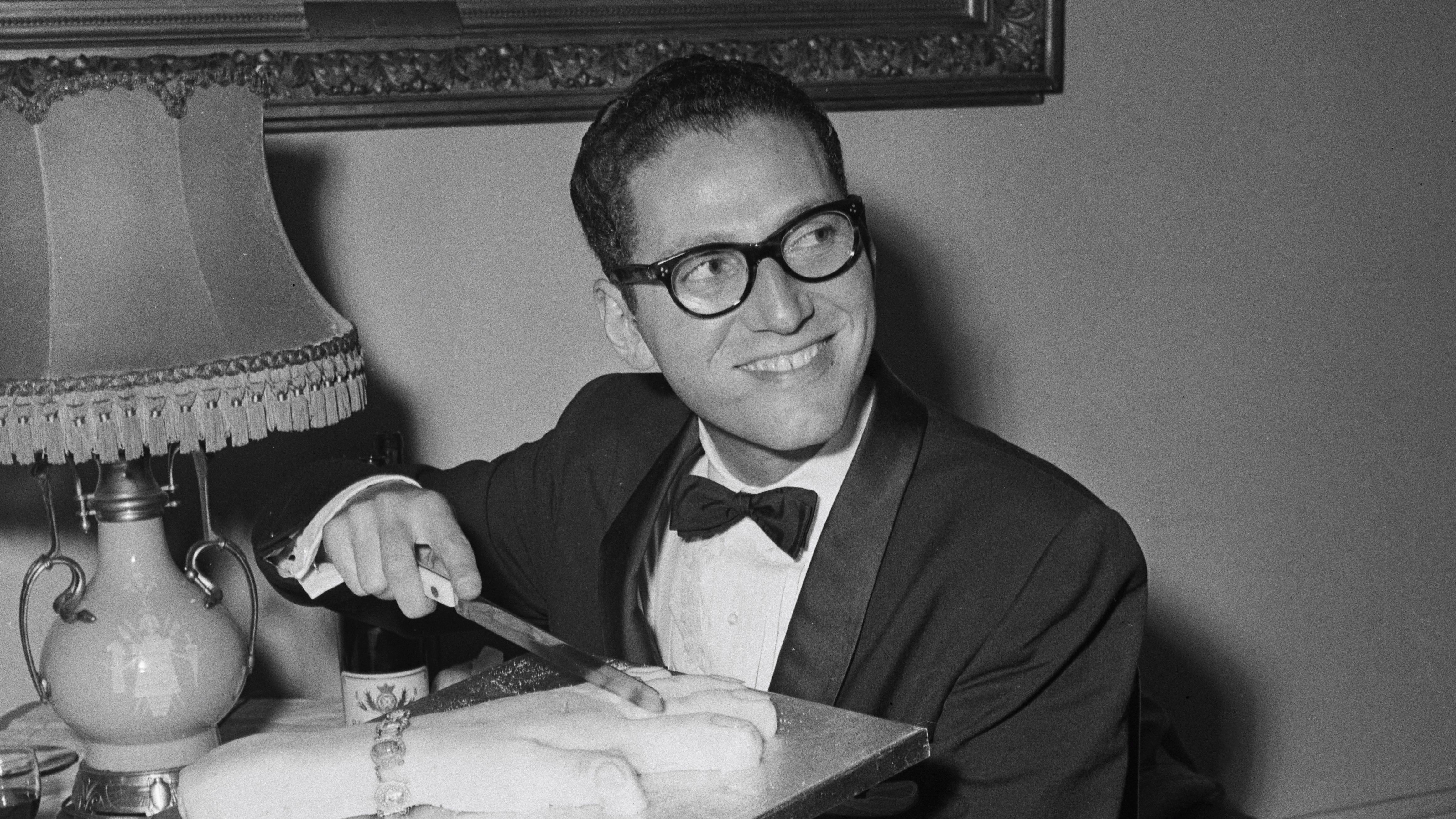

Tom Lehrer, the renowned American songwriter, mathematician, and satirist, has died at the age of 97, as reported by U.S. media. With a legacy built on sharp wit, biting humor, and musical brilliance, Lehrer left an indelible mark on 20th-century American culture. Best known for his satirical songs that tackled everything from politics and religion to education and nuclear war, Lehrer was a singular figure who used melody as a vehicle for commentary.
Born in New York City in 1928, Lehrer showed early talent in both academics and music. He studied mathematics at Harvard University, where he began writing parody songs to entertain his classmates. What started as casual amusement soon became a defining part of his career. While still a student, he recorded his debut album, Songs by Tom Lehrer (1953), which he distributed independently. Its success was largely due to word-of-mouth, driven by college students and academics who appreciated the clever lyrics and humorous critique of societal norms.
Lehrer’s approach to music seemed straightforward, often featuring only his voice and piano playing. However, the material was clever, satirical, and frequently controversial. Tracks such as “Poisoning Pigeons in the Park” and “The Masochism Tango” transformed ordinary or forbidden themes into outrageously humorous situations. “The Elements,” arguably one of his most renowned works, matched the periodic table with the melody of Gilbert and Sullivan’s “Major-General’s Song,” merging scientific accuracy with lyrical creativity.
Although Lehrer was well-known, his music releases were few. He launched just a few records, like More of Tom Lehrer (1959) and That Was the Year That Was (1965), which was a live album influenced by his contributions to a TV show analyzing contemporary issues. Lehrer humorously observed that satire lost its relevance when Henry Kissinger received the Nobel Peace Prize—a prime illustration of his cynical wit and skepticism towards world politics.
A recurring theme in Lehrer’s work was his disdain for hypocrisy and institutional authority. He lampooned the Catholic Church in “The Vatican Rag,” took aim at racism in “National Brotherhood Week,” and mocked America’s military posture in “So Long, Mom (A Song for World War III).” Yet his work rarely came across as mean-spirited. Instead, Lehrer’s tone was often mischievous, inviting listeners to laugh and reflect in equal measure.
Alongside his musical career, Lehrer maintained a strong academic presence. He taught mathematics at Harvard, MIT, and UC Santa Cruz, and was deeply respected in his field. Many of his students never realized that their unassuming professor was also a cultural icon whose records had become underground hits. Lehrer himself often downplayed his fame, expressing preference for teaching over performing.
In the 1970s, at the height of his popularity, Lehrer quietly stepped away from public performance and recording. Unlike many artists of his era, he did not pursue fame or commercial success. He avoided interviews, declined television appearances, and showed little interest in reviving his musical career. Instead, he focused on academia and personal interests, including musical theater and language studies.
Although Lehrer stepped back from public view, his impact expanded. His music kept spreading extensively, loved by enthusiasts and often introduced to newer audiences by educators, humor albums, and eventually, the web. In 2020, Lehrer captured public attention once more by revealing that he was offering all of his songs and texts to the public domain. In a brief note on his site, he mentioned that all his work should be “freely accessible to anyone interested,” highlighting his lack of interest in earnings or limitations.
This decision was in line with Lehrer’s longstanding skepticism of commercialism and his commitment to education and public discourse. By making his work freely accessible, he ensured that future audiences—especially students and educators—could explore and share his music without barriers.
Lehrer’s passing marks the end of a life that defied numerous norms. He avoided extensive touring, seldom participated in interviews, and resisted the pressures of celebrity. Despite this, he emerged as a cult idol, respected by a diverse group ranging from scientists and educators to comedians and musicians. His impact is evident in the creations of artists such as “Weird Al” Yankovic, Randy Newman, and even Stephen Sondheim, who commended Lehrer for his sharp lyrics and musical wit.
What made Lehrer unique was not just his subject matter, but the way he delivered it. At a time when popular music was becoming increasingly earnest and emotionally driven, Lehrer’s songs reminded listeners that humor could be both entertaining and intellectually engaging. His music tackled the absurdities of the Cold War, the contradictions of civil rights rhetoric, and the pitfalls of American exceptionalism—all through piano-driven comedy.
In a time characterized by widespread media presence and the influence of celebrity culture, Lehrer opted for an alternative route. He led a private life, taught with great enthusiasm, and let his creations express their value. Even many years after being made, that work still holds significant relevance. With problems like political inefficiency, cultural division, and a lack of scientific understanding continuing, Lehrer’s witty and satirical songs continue to resonate effectively.
Though he may no longer be with us, Tom Lehrer’s voice continues to echo—through recordings played in classrooms, quoted by comedians, or sung by students discovering his work for the first time. His legacy is not just one of laughter, but of critical thinking, bold expression, and the enduring value of satire.