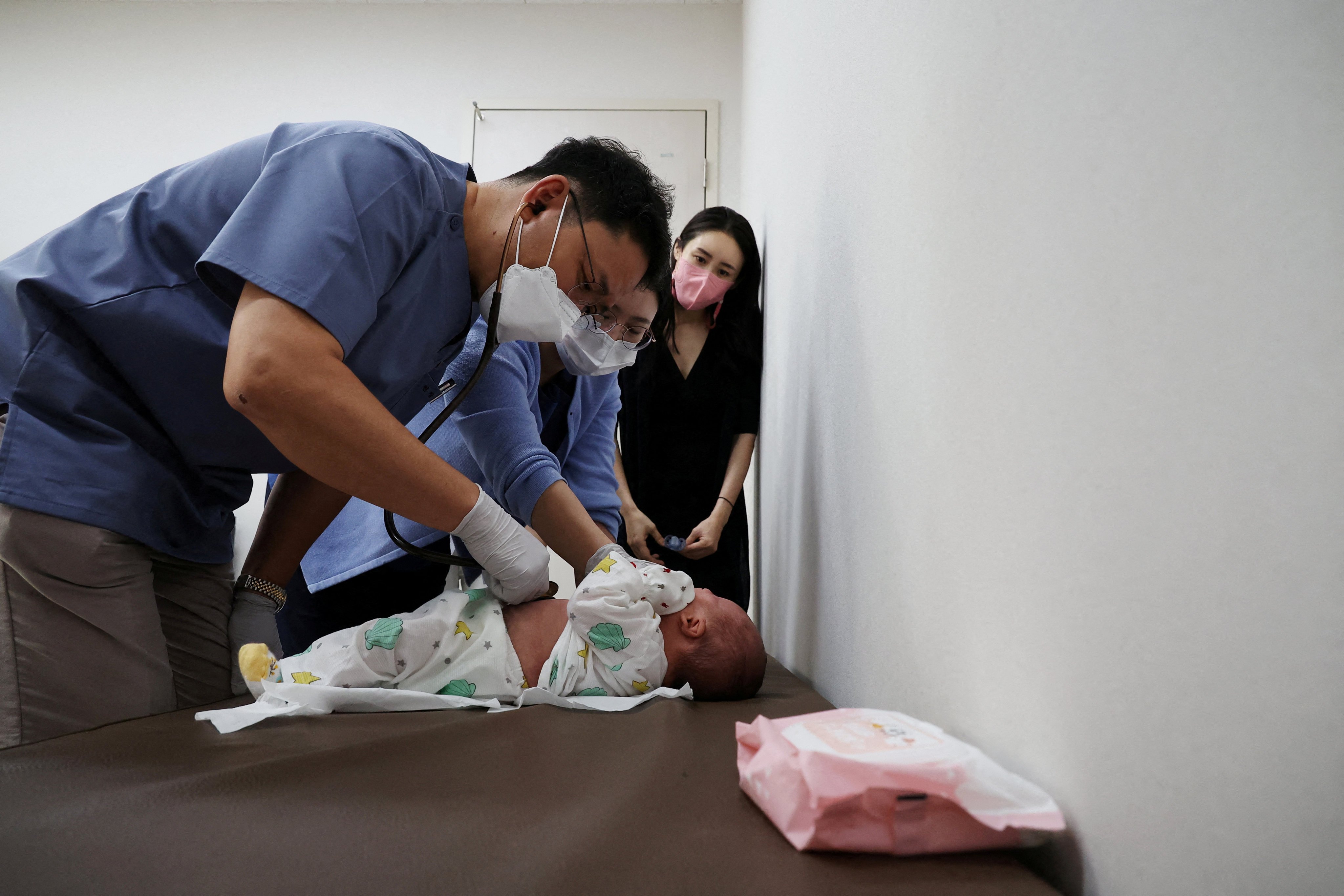

In a country now recognized for having the lowest birth rate in the world, fertility clinics are experiencing unprecedented growth as more couples turn to assisted reproductive technologies in the hope of starting families. This sharp rise in demand highlights the complex demographic challenges the nation faces, where shifting social norms, economic pressures, and personal choices have converged to create a profound population decline.
Recent statistics indicate that the nation’s fertility rate has declined to unprecedented lows, significantly below the level needed to sustain population equilibrium. Experts have long cautioned about the possible social and economic consequences of this pattern: an older demographic, reduced labor force, and mounting pressure on public services. Despite various governmental efforts to promote higher birth rates, the declining trend has continued, leading numerous individuals and couples to consult with fertility experts.
The booming fertility industry reflects both the determination of people who want to have children and the growing challenges they face in doing so naturally. Fertility centers across the country report surging numbers of consultations, treatments, and successful pregnancies, driven by factors including delayed marriage, older maternal age, and rising infertility rates linked to lifestyle and environmental influences.
In urban centers especially, these clinics have become not only more numerous but also increasingly sophisticated, offering cutting-edge reproductive technologies such as in vitro fertilization (IVF), egg freezing, and genetic screening. These services, once considered niche or financially out of reach for many, are now seen as essential options for individuals striving to conceive amidst difficult biological and social realities.
One of the main factors contributing to the increase in fertility treatments is the tendency to postpone having children. As many individuals focus on achieving higher education, advancing their careers, and gaining financial stability before thinking about family life, the average age of first-time parents has noticeably increased. This delay, however, involves biological compromises, given that fertility decreases with age, especially for women. Clinics have reacted by providing not just treatments but also raising awareness about reproductive health and highlighting the significance of planning early.
El gobierno, consciente de las amplias consecuencias de la crisis de fertilidad, ha implementado una serie de políticas de apoyo con los años, tales como incentivos económicos para las familias, ampliación del permiso parental y subsidios para el cuidado infantil. Sin embargo, a pesar de estas iniciativas, las percepciones sociales respecto al matrimonio y la paternidad han cambiado de formas que resultan difíciles de revertir. Las encuestas destacan que las generaciones más jóvenes cada vez más priorizan la libertad personal, la realización profesional y la flexibilidad en el estilo de vida, lo cual puede ir en detrimento de la formación de familias tradicionales.
Fertility clinics, therefore, have become central to the conversation about how to address the country’s demographic decline. Many clinics report that their clientele includes not only married couples but also single individuals and same-sex couples who wish to become parents, reflecting broader societal changes in the definition of family. This inclusivity has contributed to the expansion of the fertility sector, as more people seek assistance in their journey to parenthood.
The growing need for fertility services has driven innovation in the field. Clinics are adopting the newest reproductive technologies, such as time-lapse embryo observation, enhanced cryopreservation methods, and customized fertility treatments designed for specific medical backgrounds. Furthermore, the use of artificial intelligence in selecting embryos and predicting fertility is increasingly widespread, improving success rates and giving new hope to future parents.
Nevertheless, growing fertility services face hurdles along their path. The expensive nature of treatments poses an obstacle for numerous individuals, as processes like IVF often necessitate several attempts to reach a positive outcome, each imposing considerable financial, emotional, and physical pressures. Although certain government initiatives provide partial financial aid, personal expenditures can still be a deterrent, especially for younger individuals or those in lower-income groups.
In response to this issue, certain decision-makers are advocating for increased governmental backing for fertility treatments, suggesting that lowering financial obstacles might assist in reversing the downward trend in birth rates. The proposals have comprised complete insurance coverage for fertility procedures, tax incentives for households, and enhanced public educational initiatives to inform people about reproductive health.
The psychological impact of infertility and fertility treatment is another important consideration. Couples and individuals undergoing these procedures often face stress, anxiety, and feelings of isolation. Fertility clinics are increasingly incorporating mental health support as part of their services, offering counseling, support groups, and wellness programs aimed at helping patients navigate the emotional complexities of their reproductive journey.
As the fertility industry expands, ethical issues are increasingly coming into focus. Discussions surrounding embryo selection, surrogacy, donor confidentiality, and the commercialization of reproduction are becoming more frequent. Finding a balance between technological advancements and ethical concerns will be essential as the industry continues to progress.
International comparisons reveal that the fertility crisis is not unique to this country. Many developed nations, from South Korea and Japan to parts of Europe, are grappling with similarly low birth rates and the accompanying social challenges. Fertility clinics in these countries are likewise expanding, underscoring a global trend toward reliance on reproductive technologies as natural conception rates decline.
The rise in fertility treatment also raises important questions about gender dynamics. In many cases, the burden of delayed childbearing and infertility falls disproportionately on women, who face biological time limits and often shoulder the physical and emotional challenges of treatment. Advocates argue for greater societal recognition of this imbalance and for workplace policies that better support family planning and work-life balance for all genders.
For many individuals and couples, however, the growth of fertility clinics represents a source of hope in the face of declining fertility. The success stories—of families created after years of struggle, of individuals who thought parenthood was out of reach—speak to the profound impact these services can have on people’s lives. These narratives are powerful reminders that while demographic trends may be shifting, the desire to build a family remains deeply rooted in human experience.
The prolonged consequences of the nation’s declining birth rate reach further than just personal households. Experts in economics caution about possible workforce deficits, reduced pace of economic development, and heightened medical expenses linked to an aging society. Tackling these challenges necessitates not only backing fertility interventions but also fostering a setting where individuals have trust in their future possibilities—where reasonably priced housing, secure jobs, and encouraging community frameworks render parenthood more appealing and feasible.
Anticipating the future, addressing the issue of the dropping birth rate will probably necessitate a comprehensive strategy. This entails ongoing support for fertility resources, bolstered social safety nets, changes in work environments, and societal adjustments that honor and sustain family dynamics while respecting the decision of those who opt out of parenthood. Additionally, it will require tackling gender parity, promoting joint parenting duties, and devising inclusive policies that acknowledge the various ways individuals form families nowadays.
In the interim, reproductive health centers will remain crucial in assisting people and couples in achieving their aspirations of becoming parents. Their increasing importance in the medical field highlights not only advancements in treatment but also the persistent human longing to bring forth, care for, and maintain life—even amidst significant social and population shifts.
The story of this nation’s declining birth rate is still being written. Whether through technological advances, social transformation, or policy reforms, the journey to reversing this trend will undoubtedly be complex. But at the heart of it remains a simple truth: for many, the hope of starting a family endures, and fertility clinics are helping to turn that hope into reality.