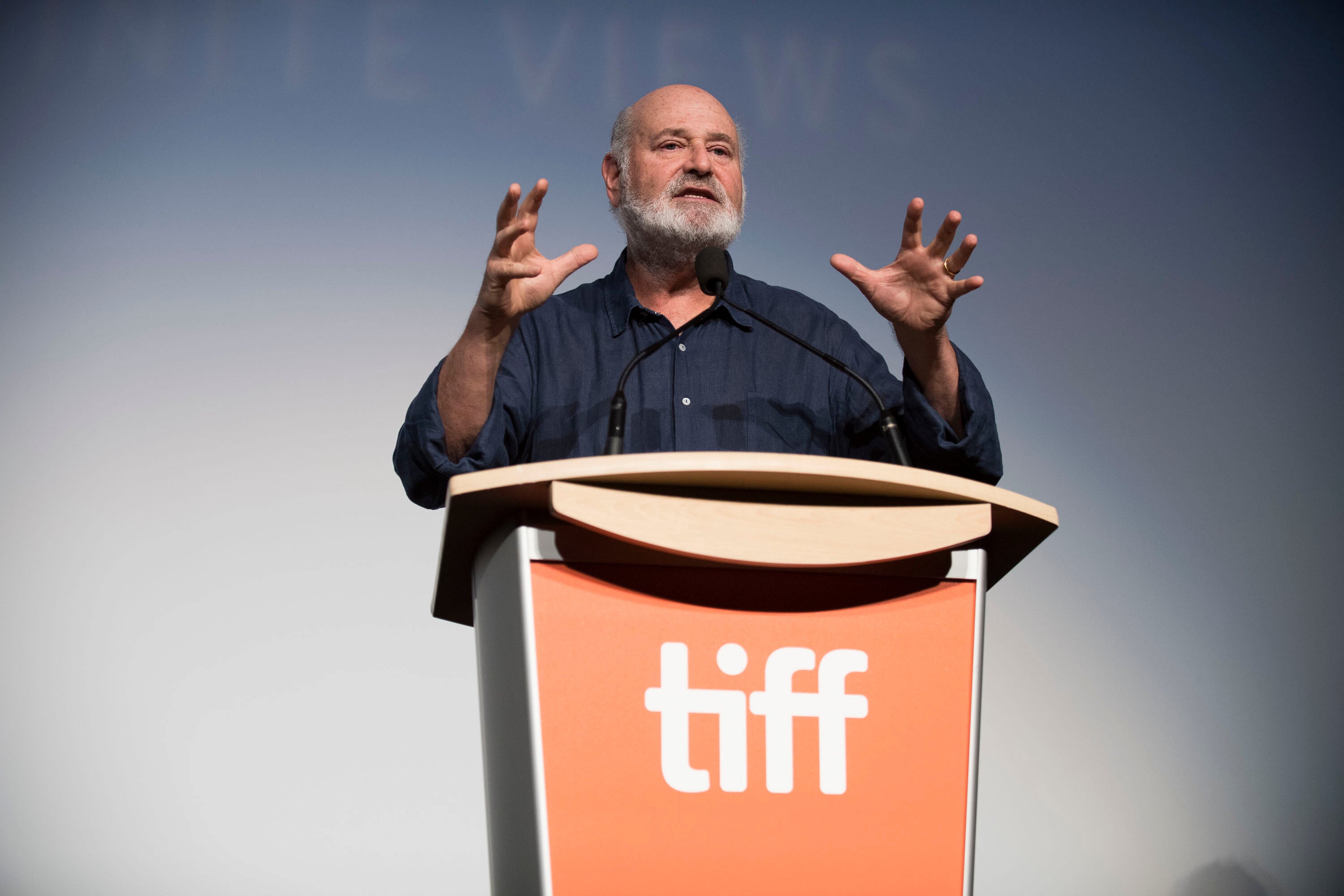

Nine months after his death, Rob Reiner was honored with a posthumous Emmy for his final television performance. The award recognized his guest role in FX’s acclaimed comedy-drama The Bear, adding another milestone to a career that spanned decades in Hollywood.
Rob Reiner received a posthumous Emmy Award for his work in The Bear, marking an emotional recognition for one of Hollywood’s most accomplished actors and directors. The honor came nine months after his death and celebrated what became his final role on television.
Reiner secured the Emmy for outstanding guest actor in a comedy thanks to his role in the fourth season of the FX series. The accolade was revealed during the gala formerly designated as the Creative Arts Emmys, a two-day gathering hosted at the Peacock Theater in central Los Angeles prior to the primary televised Emmy Awards broadcast.
The announcement prompted an extended standing ovation from members of the audience, including friends and colleagues from across the entertainment industry. The response reflected the significance of Reiner’s long career and the influence he maintained in Hollywood as both a performer and filmmaker.
Although he was broadly recognized for helming a few of the most unforgettable movies over the past several decades, Reiner’s last television cameo introduced him to a fresh audience of watchers via The Bear.
His performance in the series was warmly received when the fourth season premiered in the summer of 2025. His character, a kind-hearted business consultant, became a notable part of the show and generated interest among fans who hoped he might return for a future season.
That possibility ended following Reiner’s death.
A final performance recognized by the Television Academy
In The Bear, Reiner appeared in a guest role that highlighted another side of his lengthy career as an actor. While his name is closely associated with his work behind the camera, he first gained widespread recognition through television.
His Emmy-winning performance on the FX program proved that, long after establishing himself as a recognizable presence in cinema, Reiner was still fully capable of leaving a lasting impression on viewers.
The Television Academy acknowledged his contributions within a fiercely contested field featuring numerous seasoned actors. Reiner secured a nomination alongside Michael J. Fox and Brett Goldstein for their performances in Shrinking, Hamish Linklater for Widow’s Bay, Christopher McDonald for Hacks, and Connor Storrie for Saturday Night Live.
The accolade penned yet another chapter in Reiner’s Emmy legacy.
His most recent triumph arrived nearly half a century following his prior acting Emmy victory. Prior to taking on his character in The Bear, Reiner had secured a pair of Emmy Awards for his depiction of Michael “Meathead” Stivic within the iconic CBS sitcom All in the Family.
The character became one of the most recognizable roles of his early career. Reiner’s portrayal of Meathead placed him at the center of one of television’s most influential comedies and helped establish him as a prominent performer long before he became one of Hollywood’s best-known directors.
The nearly fifty-year interval separating his Emmy triumphs rendered this posthumous acknowledgment remarkably prominent.
It additionally forged a link to the television background of his own family. Carl Reiner, the father of Reiner, stood as a highly impactful comedian, performer, author, and director who likewise encountered an extended hiatus between securing Emmy victories within acting divisions.
Carl Reiner secured an Emmy in 1995 for a guest role on Mad About You, 37 years after he was awarded his second Emmy for Caesar’s Hour in 1958.
The achievements of father and son represent two distinct but closely connected careers that left a significant mark on American television and entertainment.
From television triumph to a prominent cinematic journey
Rob Reiner’s professional journey reached well past the realm of acting.
He turned into one of his generation’s most accomplished and versatile directors, helming a portfolio of films spanning romance, comedy, drama, fantasy, and psychological suspense.
Among the films most closely associated with his career are This Is Spinal Tap, The Princess Bride, When Harry Met Sally and Misery.
Each of these productions occupies a distinct position within popular culture, showcasing Reiner’s talent for shifting across genres while preserving a unique narrative perspective.
This Is Spinal Tap emerged as one of the quintessential mockumentaries in cinematic history, blending musical elements with humor via a fictional narrative centered on a rock band.
The Princess Bride evolved into a cherished fantasy adventure that kept drawing in viewers well past its debut.
When Harry Met Sally became one of the most recognizable romantic comedies of its era and remains closely associated with Reiner’s work as a director.
Meanwhile, Misery, which draws upon the Stephen King novel, highlighted his talent for thriving within a much darker and more thrilling framework.
The diversity of these projects helped establish Reiner as a filmmaker willing to challenge himself rather than remain tied to a single type of production.
His work contributed to shaping different periods of modern American cinema, and his films continued to be discovered by new audiences through television, streaming platforms and home media.
For a lot of viewers, Reiner gained initial recognition as a director. Yet, his Emmy track record served to recall that his professional journey kicked off with a major television triumph.
His final role in The Bear brought those two parts of his professional life together. Decades after earning recognition as a young television actor, he returned to the medium in a role that would ultimately become his last.
A posthumous honor after a tragic loss
Reiner’s Emmy was awarded following his death in December of the previous year.
He and his wife of four decades, Michele Singer Reiner, were found dead at their home in Brentwood, Los Angeles. The couple’s daughter discovered them.
Their son, Nick Reiner, has been charged with stabbing his parents to death. He has pleaded not guilty.
The circumstances surrounding the deaths brought a tragic end to the lives of a couple who had spent decades together and who were part of a well-known family in the entertainment industry.
Nine months later, a different backdrop was provided by the Emmy ceremony, allowing Reiner’s peers and colleagues to reflect upon his professional legacy.
The standing ovation that followed the announcement of his award demonstrated the respect he continued to command within the industry.
For the audience, the moment was not only about a single television performance. It also represented recognition of a career that lasted for generations and crossed multiple areas of entertainment.
Reiner’s appearance in The Bear had arrived late in a professional life that had already included major achievements in television and film.
Nevertheless, his persona resonated with audiences and contributed yet another unforgettable performance to his artistic repertoire.
When the fourth season aired in 2025, viewers responded positively to his portrayal of the business consultant. His appearance also created speculation about whether the character could return if the series continued.
Following Reiner’s death, however, that possibility could no longer become reality.
The Emmy accolade consequently holds deeper meaning, since it pays tribute to the ultimate television performance by a performer whose professional journey in the medium started decades prior.
One of the longest gaps between acting Emmy wins
Reiner’s most recent Emmy also draws attention due to the extended period separating his wins.
His previous awards came for his performance as Michael Stivic in All in the Family, one of the most influential sitcoms in American television history.
Nearly half a century later, his name returned to the list of Emmy winners for a performance in an entirely different kind of television production.
The contrast between both eras highlights the evolution experienced by the television landscape throughout Reiner’s life.
All in the Family represented a period dominated by traditional network broadcasting, while The Bear emerged in a modern television landscape shaped by cable, streaming and changing viewing habits.
Reiner’s career connected these very different eras.
His recognition for The Bear also placed him in a relatively rare group of performers to receive a posthumous Emmy in an acting category.
He became the first actor to receive such an award since 1995, when Raul Julia was honored for his performance in the television movie The Burning Season after his death the previous year at the age of 54.
Posthumous awards often carry a different emotional weight because they provide recognition after an artist is no longer present to receive it.
In Reiner’s case, the distinction recognized a remarkable achievement accomplished just prior to his passing, while simultaneously emphasizing the exceptional duration of his career.
His ultimate television role linked him to one of the most acclaimed and heavily discussed shows in recent memory.
At the same time, the award recalled the television work that had helped launch his career decades earlier.
A career remembered across generations
Rob Reiner’s posthumous Emmy represents more than another trophy in an already extensive career.
The award brings together several chapters of his life in entertainment: his early success as an actor, his later achievements as a filmmaker and his final return to television.
Over the years, he worked in front of and behind the camera, earning recognition from audiences who knew him through different generations and different forms of storytelling.
Some recall him mostly as Meathead from All in the Family. Other fans link his identity to motion pictures like The Princess Bride or When Harry Met Sally. Lately, audiences have spotted him via The Bear.
This ability to remain connected to audiences over several decades is part of what made his career distinctive.
The Emmy Award for The Bear came amidst tragic circumstances, yet it provided the Television Academy and the entertainment sector a chance to honor his ultimate performance as an actor.
The prolonged applause following the announcement mirrored the deep admiration and regard that numerous colleagues felt toward him.
Reiner leaves behind a professional legacy that includes some of the most recognizable films and television performances of the modern era.
His ultimate performance failed to reshape that heritage, yet it provided a significant concluding chapter for it.
Almost fifty years passed between his earlier acting Emmy and the accolade granted following his passing.
Between those two moments, Rob Reiner evolved into a major creative force in Hollywood, helming motion pictures that stayed firmly embedded in popular culture while persistently showcasing his artistic versatility.
His posthumous Emmy for The Bear now stands as the final major television accolade of a professional journey that commenced on television screens, transitioned into film, and ultimately came back to the small screen for one final chapter.